
Trump's War on the Fed, Explained. Plus, How One School Teacher Stood Up to Putin.
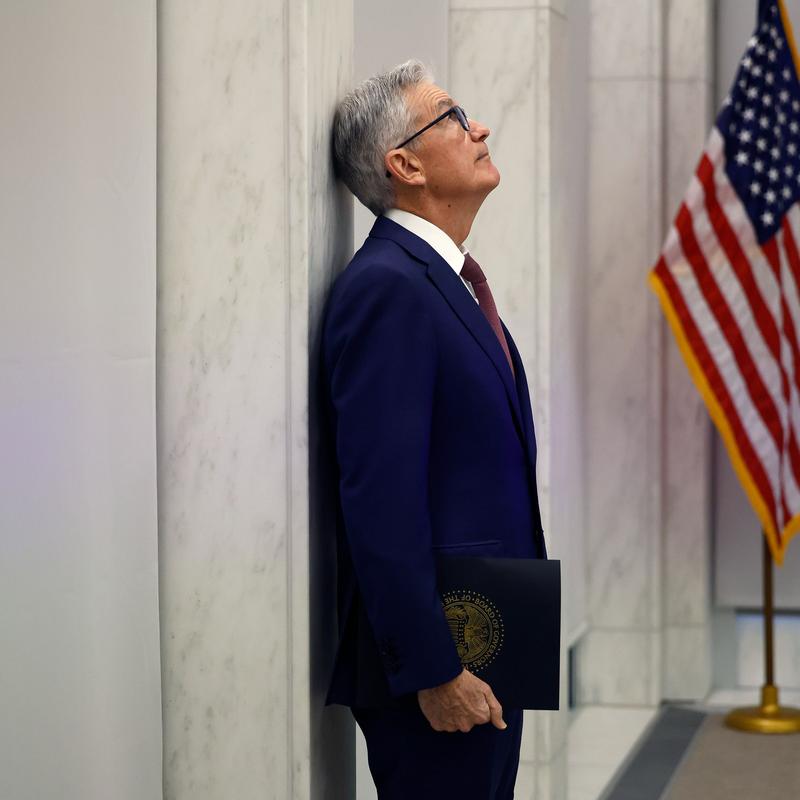
Mark Blyth: The Fed is the titular observable institution.
Brooke Gladstone: It's like going into the prison and beating up the big guy.
Mark Blyth: Exactly. Take the bologna sandwich, slam it on the floor, head bottom, and walk out.
Brooke Gladstone: That's one theory behind the Trump administration's investigation into the chairman of the Federal Reserve. There are others. From WNYC in New York, this is On the Media. I'm Brooke Gladstone. Also on this week's show, a new documentary reveals how a Russian propaganda pushed in schools is preparing a new generation to die on the battlefield. The co-directors of the documentary titled Mr. Nobody Against Putin finally met after two years of talking on the phone through a translator.
David Borenstein: I finally showed him a real cut of the film. He watched it. The first thing he said to me was, "David, I was 50% certain this whole thing was a scam."
Brooke Gladstone: It's all coming up after this.
[music]
From WNYC in New York, this is On the Media. Micah Loewinger is out this week. I'm Brooke Gladstone. By now, you've heard of the latest marbled citadel in Washington to run afoul of the Trump administration, ironically, partly because of its marble.
News clip: This morning, federal prosecutors have launched a criminal investigation into Federal Reserve Chairman Jerome Powell related to his testimony before a Senate committee about the multi-billion-dollar renovation of two reserve buildings.
Brooke Gladstone: Powell, not famously a hothead, fired back at the administration in a two-minute-long video message.
Jerome Powell: The threat of criminal charges is a consequence of the Federal Reserve setting interest rates based on our best assessment of what will serve the public rather than following the preferences of the President.
Brooke Gladstone: There's been a lot of hand-wringing about the independence of the Fed, an institution which has traditionally been outside of the political fray.
News clip: If for political reasons they lower interest rates to appease the president, there's going to be no end to that. Future Democrats could do the same thing. That's bad.
Mark Blyth: As Mervyn King, who used to be the head of the Bank of England, puts it, you don't want an inflation nutter in charge of the government.
Brooke Gladstone: Mark Blyth is a professor of international economics and public affairs at Brown University.
Mark Blyth: Someone who will drop rates, that will make credit really cheap. Everyone will go have a party. There isn't enough stuff. The price of stuff will go up. You'll get inflation, right? That's what they're worried about, okay?
Brooke Gladstone: It's what everyone is talking about and warning about, but steady on.
Mark Blyth: Now, for that to happen, the Fed would have to have real control over the whole curve, and they don't.
Brooke Gladstone: A quick Econ 101 refresher. Historically, the power of central banks stems from their ability to steady economic waters by setting interest rates, acting as reserves for commercial banks, and buying and selling things like bonds, essentially IOUs, where in return for lending the government your money, you get it back later with interest.
The curve is how much it costs to borrow money over time. The Fed has plenty of short-term control over that cost, but long term, if whoever is buying the bonds, everyone from pension funds to individuals, if they lose faith in what the government is doing, they can say, "We won't take on the government's debt unless we get a higher interest rate." A key example of this ebb and flow happened this week.
Mark Blyth: Look at what happened with the credit card stuff. Trump comes out and says 10%. That's it.
Brooke Gladstone: That's a 10% cap on credit card interest, a policy championed by both parties. Their premise is, hey, if we are asked to lend money, which is extend credit to someone who is a low earner or has a shaky credit score, we need to get compensated for that risk.
Mark Blyth: The banks go, "Well, there'll just be less credit."
Brooke Gladstone: That said, Blyth argues that central banks are in fact far less responsible for the supply of money in the economy as a whole than we may believe.
Mark Blyth: We deregulated banks in the 1980s, and what that means is the vast majority of cash-- The Bank of England, in 2014, estimated that for the UK, 96% of all cash is not anything that comes from the central bank. It's actually just commercial bank loans.
Brooke Gladstone: As this story unfolds, he says there are a few ways to understand the DOJ's investigation into the Fed chair. Yes, it could be an authoritarian power play or a Trumpian distraction. But he favors another reason that this is a story about a trend, the slow decline of the power and independence of central banks everywhere.
Mark Blyth: There's a feeling amongst Americans who think about this stuff that Moses found the tablets, he handed them to George Washington, and the 11th Commandment is, "Thou shalt have an independent central bank." That's not what happened. The United States only got it's fed in 1913, and that fed was actually quite supportive of government actions all the way through the New Deal. It's only in 1951 that it carved out its independence.
There's a bit of a spot between the Fed and the treasury and Harry Truman, and the bank says, "Our job is actually just making sure that the currency is stable and inflation doesn't get out of control." They had what were called the Fed Treasury Accords, where they basically divided up the territory. And this is where we get the distinction between fiscal policy, what the government does, taxes and spending, and monetary policy, what the central bank does.
Now this is complicated by the fact that the Fed has a dual mandate that also comes out of World War II, which says that you'll also maximize employment. Now, if you think about this for a minute, if you have a standing charge from the legislature, you only exist because of Congress. You have to report to Congress. One of the things you have to do is to make sure that there isn't mass unemployment. They've already told you what to do.
The notion that you're completely independent has always been a bit of a myth. What are you independent on? So-called operational control of interest rates. This is where the 1970s comes into it. That's when we start to worry about inflation. The lesson that we took from that was Paul Volcker, who was in charge at that time, bangs interest rates up to nearly 20%, causes a massive recession, inflation falls from 16% all the way down basically over the next several years, it takes a while, but the economy loses inflation.
By 1984, Ronald Reagan saying, "It's morning in America," and the economy takes off on a tear. This is the beginning of the rationale for having big, powerful independent central banks that don't let the government spend too much money. Then when the financial crisis hit in 2008, we turned to the central banks because they were the ones in charge and said, "Right, lads, you need to fix this terrible mess."
Brooke Gladstone: It was the commercial banks that caused it.
Mark Blyth: Yes, I know, but basically it's the same as 1913. The banks got themselves into trouble, and you want the central bank to fix it.
Brooke Gladstone: Now bring us up to the present.
Mark Blyth: Central bank independence reaches its zenith basically just before the global financial crisis. Then they're kind of discredited because they were the people that said, "We've got this," and there was a huge crisis that engulfed the whole world. Ultimately, these are creatures of a particular time. Now, that particular time, as they used to put it, the great moderation, very low volatility, interest rates are low, growth is nice, everything's ticking along, just everything's good. We don't live in that world anymore. We live in a world of geopolitics. We live in a world in which we're-- literally the United States is saying, we don't really care about democracy anymore, we're just going to occupy countries and take their oil. That happened so quickly.
Brooke Gladstone: Are you saying it's just less important?
Mark Blyth: You're focusing on short-term interest rates and central bank independence. It's like the whole house is burning down and you're worrying about your favorite rug.
Brooke Gladstone: So we should not worry about Trump using--
Mark Blyth: It's not shoulds. Brooke, Brooke, it's not shoulds. None of this is my opinion, but ought to be. What I'm trying to get away from, there's a way in which people talk about this stuff in the United States, where it's like people who watch the West Wing and wish they lived in that world. You don't live in that world. That world does not exist.
Brooke Gladstone: It's a moderating enterprise for an immoderate time.
Mark Blyth: Yes, exactly. It's a set of institutions that don't respond well to randomness and volatility, put it that way. That's the world that we're in. Again, I'm not endorsing this. I'm not saying this is good. This is where we should be. I like the 90s, but we can't just pretend that we're back there and worry about the same things, because we don't live in that world anymore.
Brooke Gladstone: All around the world, leaders have decided that they don't want their central banks independent anymore as the populist right rises everywhere. The example of where this idea was carried out is Turkey, and that was a disaster.
Mark Blyth: It was indeed. That's the cautionary tale that people like to point to. The guy who runs it, Erdogan, basically has this idea, which is intuitive, but from the point of view of anybody who does this stuff. Wrong. Here's the intuitive idea. When you push up interest rates, things get more expensive, so why do you increase interest rates if you want to make things less expensive? Ah, intuitive, right, right?
Okay. The thing is by making credit more expensive, the economy slows down, and that shifts people's expectations of prices, and that helps to lower inflation. That's the standard model. He was like, "No, we're basically going to have lower interest rates to combat inflation." Of course, that didn't work. They ended up with very high inflation. On the flip side of that, what they also did was it crashed their currency, and then their exports got a lot cheaper.
Now, is the United States Turkey? No, the United States prints the thing that everybody else needs to earn in order to import food. If the United States cut interest rates to 1%, would it produce a Turkey-like reaction? Well, here's what happened. The President of the United States said, we're going to basically not just reduce central bank independence, we're going to arrest the chairman and the markets went, meh.
Because either they know it's bull [bleep] and it's just disruption, or alternatively, they see the world in such a way, they're like, "All right, so he cuts it to 1%. Might get a little pickup in inflation in the United States if it feeds through." We thought tariffs was going to feed through inflation. That didn't happen. Meh.
Brooke Gladstone: Let's move on to the second narrative that you might use to explain this or that you might apply to this situation, that it's simply a power play. It sure sounds like it.
Donald Trump: We have a bad Fed chairman. He's bad in a lot of different ways, but he's bad because his interest rates were too high. He's got some real mental problems. I'll be honest, I'd love to fire his ass. He's renovating a small building. It's the most expensive construction job in history. He's billions of dollars over budget. He either is incompetent or he's crooked.
Brooke Gladstone: What does that mean for our economy if it's left prey to the manipulations of presidents who want to stay in power no matter how much people suffer in the long term? Or are you saying that the Fed just isn't that powerful?
Mark Blyth: I'm saying that the Fed is extremely important. It's the global central bank. Is it important to have a central bank that basically does bank regulation well and make sure that the credit system blow up? Yes. Hell, yes. Absolutely. What we've done is this weird thing where we've made the head of the Fed the most important economic person on the planet, and whatever they do is the most important thing. We have made him that in our imaginations, and that is simply not the case.
Brooke Gladstone: So this is a power play because Trump believes in the Fed's power?
Mark Blyth: Because the Fed is the titular, observable, obvious institution in which to say, if you push this over and put your yes man in charge, you're signaling to every other independent agency in the government, "You will now do what I say."
Brooke Gladstone: It's like going into the prison and beating up the big guy.
Mark Blyth: Exactly. Exactly. That's it. Yes. Take the baloney sandwich, slam it on the floor, head butt him, and walk out. That's pretty much it.
Brooke Gladstone: Trump may not get his way. Multiple Republicans have gone on record saying that the Fed's independence is important. North Carolina's Thom Tillis on the Senate Banking Committee is an important guy. He said he's ready to hold up all Fed appointments until this thing with Powell is "resolved," which I think means Trump has to back off. Maybe it's not a well-thought-out power grab.
Mark Blyth: Here's the last possibility as to what this is. You fell for it again, Brooke.
Brooke Gladstone: The distraction?
Mark Blyth: It's flood the zone.
Brooke Gladstone: I am going to really argue with that here, because look, we've done nothing but talk about these distractions. We've extensively covered how this administration has flooded the zone in the first 12 months and the last time around. It's an absolutely real and relevant tactic, but Americans do consistently vote with their wallets. Americans now increasingly disbelieve that Trump can handle the economy.
Mark Blyth: What exactly is Powell being arrested or whatever got to do with any of that?
Brooke Gladstone: Powell and the central bank and all of that is conflated with the whole notion of affordability and controlling prices and so forth. You think that's not how the public perceives it.
Mark Blyth: Half the public couldn't tell you what the central bank is if their life depended on it.
Brooke Gladstone: That's true, but they've seen the headline, "Bad for the Economy."
Mark Blyth: Okay, so they believe all headlines then. In which case, they should just believe Trump. Where exactly do we want to go with this? Venezuela may be a distraction option. You don't get to run a country by kidnapping a guy and his wife and saying, we now run things. You actually need to go run things. Basically, saying we're going to arrest the Fed chair when you know that you're not going to arrest the Fed chair strikes me as just another distraction. This entire thing could literally just be, "What do I do this week to stay in the headlines?"
Brooke Gladstone: Mark, let's consider that all three of your stories about what's going on now are correct. That removing Powell or trying to, or simply discrediting the independence of a central bank, is a global trend. Also, it's a power grab and serves as a temporary distraction from less flattering news.
Mark Blyth: Yes, that's the all of the above answer. I fully sign up to the all of the above answer.
Brooke Gladstone: How should people watch this story if not for the politics, then for their pocketbooks?
Mark Blyth: My recommendation is don't watch it at all. I hate to say that, particularly to a media show, but basically, it's toxic, and everyone's losing their minds. There's lots of things to be worried about that will definitely impact your pocketbook. Let's go back to groceries. Groceries are up 20% from where they started at the beginning of the pandemic. They're not coming down.
Brooke Gladstone: There's nothing that the central bank can do about that?
Mark Blyth: It's not a central bank problem. Cutting interest rates to 0.5% is not going to make the price of carrots any different. I know we're looking for reasons, we're looking for solutions in this incredibly volatile and complex moment. It doesn't help that we have an administration whose policy seems to be, "Is that a fire? I've got a bucket of gasoline."
Brooke Gladstone: With regard to the central bank, sum it up in a couple of sentences.
Mark Blyth: Great respect for central banks and central bankers. Many of my friends are central bankers. I'm going to put it this way: Independent central banks, you can't live with them, you can't live without them. They're really important institutions. There's a reason that almost every country has one. If you have money in banking and credit, chances are you'll have a central bank to keep them in line and make sure it doesn't blow up. The mistake that we made, if we made a mistake, was to basically treat these guys as the masters of the universe, and they're not.
Brooke Gladstone: Mark, thank you so much.
Mark Blyth: Always a pleasure.
Brooke Gladstone: Mark Blyth is a professor of international Economics and Public affairs at Brown University.
[music]
Coming up, a new documentary reveals how a Russian propaganda pushed in schools is preparing a new generation to die on the battlefield. This is On the Media.
[music]
This is On the Media. I'm Brooke Gladstone. What follows is a detailed account of the effort to indoctrinate school children by revising history, authorizing new texts, and monitoring teachers to ensure they follow the new rules. No, it's not happening that way here yet, though it could, it's happening in Russia and we can watch it happen in a new documentary now getting Oscar buzz called Mr. Nobody Against Putin.
The titular nobody is Pavel, nicknamed Pasha Talankin, the social director, AV guy, and all-around sounding board for students at the biggest primary school in Karabash, a small town in the Ural Mountains where Stalin once sent undesirables to work in the copper smelting plant. Pasha was happy there until February of 2022 when the war in Ukraine came to town in the form of government directives to radically change the curriculum in an increasingly stomach-churning effort to prepare the young for the battlefield, because as Putin once said, "Commanders don't win wars, teachers win wars."
Since Pasha was videotaping school activities anyway, he decided to tape everything and in an unimaginably risky leap of faith, sent it to documentary Filmmaker David Borenstein, a man essentially unknown to him, based in Copenhagen. The result is this gripping chronicle and cautionary tale. Pasha, hello.
Pasha Talankin: Hello.
Brooke Gladstone: The film starts in early 2022. You're a videographer and events coordinator at a primary school in Karabash, an industrial town in the Ural Mountains. Describe your job.
Pasha Talankin: My job consisted of organizing all kinds of events, from concerts to holidays, to cultural and intellectual events, and even sometimes sports competitions. I really loved it. It was amazing. I had a great director of the school, and she would always call me into her office and say, "Okay, Pasha, what's the next surprise? What's your next new script?" When COVID happened, we started filming a lot and doing a lot online.
After COVID, everyone thought, "Well, hey, we have all this experience of filming everything, so we can just keep filming," so yes, I would film everything that I would organize. I also had a circle of some of the older kids, like an extracurricular, where I would teach them, and they would film something, and they would learn to edit. Some of my students would then go off and get part-time jobs at the local television station and kind of earn a little bit of money. I'm really, really proud of them.
Brooke Gladstone: You weren't just the professor of fun. In addition to the technical skills of editing and filming, what did you want to give them?
Pasha Talankin: When I was in school, I never had any kind of place where I could just go anytime, sit with people, have tea, and talk about big problems, small problems, just share what was going on in life. I never had a space like that.
Brooke Gladstone: That is safe.
Pasha Talankin: Yes.
Brooke Gladstone: Then In February of 22, Putin announces the full-scale invasion of Ukraine. Things start changing dramatically.
Pasha Talankin: The 14th of March, literally just a few weeks after it happened, all of the directives started arriving at school with literally scripts for every class and what the teacher should say and how they should say it, and also video material and everything that they were supposed to include in their classes.
Brooke Gladstone: What was the nature of that material?
Pasha Talankin: At first, the assistant director of the school told me that it was just going to be we were going to photograph it, but then called me and said, "Now it turns out we have to film it all. " It had to be very carefully filmed so you could see the teacher and that they were reading from the script and that there were children in the room and it was full, and that they were reacting to what they were told and that all of the video that was being sent to be included in the lesson was being projected and all of that needed to be proven.
For example, I remember one of the very first ones, the teacher was reading from the script about how Russia, Ukraine, and Belarus were all united countries. We all share language, we have the same fairy tales, and the same past. Unfortunately, now Ukraine has gone onto a path of Nazification, and we must free them. When I saw that first lesson, my glasses even fogged up. It was so powerful. I understood that I didn't even morally have the right to delete this footage because I was capturing a very specific era in our country.
It occurred to me, I thought, "Oh, my God, we have so many schools all over Russia, and we're all filming this, uploading this. Can it really be that there's some guy who's just sitting there and is going to watch all of this footage from all of the schools all over this country?" I did an experiment. I filmed a whole lesson, 45 minutes, an academic hour, but then I only included the first few minutes and the last few minutes, and everything else in between was black. There was no reaction. Nobody said, "There's something wrong with your lesson. Maybe there was a camera technical problem, but we can't watch it." There was absolutely no response to it.
Brooke Gladstone: Many of the teachers resented, hated what they were being asked to do, but I think you took it harder than anyone else.
Pasha Talankin: I realized that I was there to be the government, the signal for the teachers, "Watch out, we're here watching you." It wasn't to give the government this information. It was to be there for the teachers to let them know that they were being watched.
Brooke Gladstone: You took a risk when you sent that lesson that was blacked out in the middle, and I want to know why. The film suggests this might have something to do with what your mother taught you.
Pasha Talankin: In Russia, there is a holiday on the ninth day after Easter, everybody goes to the cemetery. There my mom would tell me different stories about who was who and who came from where and our relatives. For some reason, she would only tell me those stories of our family there at the cemetery. As I got older, she started telling me about this family member was repressed under Stalin, and this one, and this one was repressed, and this one was repressed.
I was just sitting there, incredulous and thinking, "What? Was everybody in our family repressed under Stalin?" The next year, when we went to the cemetery, I hung a microphone on her and took a camera because I needed to hear these stories. Someday she's not going to be here. Then who's going to tell these stories? Who's going to know that all of our family were persecuted by Stalin and sent into exile out into Karabash.
Before I left Russia, I gave that material on a flash drive to my sister. I said, put this in the photo album. This is not for you. This is for your kids and for their kids. I just actually can't say why I did it. I just felt this compulsion to just do something. All those things I did, Lady Gaga and the anthem and the flag and putting the X's on the windows, there are all these kids around me, and they're also thinking people, but they don't have anyone to talk about all of this with. When they saw all of that, it was like a signal to them that the school is not completely lost, that there are people that you can talk to. You're not alone. You are not alone. There are people for you.
Brooke Gladstone: Those events, playing the national anthem sung by Lady Gaga, not just in your office, but over the entire school audio system. To black out the windows with Xs in solidarity with Ukraine wasn't just for the students. That was for the whole community and that was risky.
Pasha Talankin: Yes, it was risky, but it was all right after Putin announced that the US was now our enemy. Right after that announcement, I went and I grabbed the American flag and put it in my office.
Brooke Gladstone: Naturally, then, some weeks later, you were scrolling on Instagram, and you came across a post from a Russian web content company asking for people to submit stories about how their jobs had been changed by what Putin called the special military operation, and you responded with a long email describing your frustrations. You said, "I am a teacher forced to do the exact opposite of what a teacher should do."
Pasha Talankin: That was because I was just so filled with fury. When there's that much fury inside you, you just act. You don't really think about what the consequences are going to be. I was just so furious. At that moment all of these lessons had been increasing and increasing and increasing, and I've been filming more and more and more material, and nobody was talking about it. Everybody was just silent. When that missive came out, I just was like, "Take it. Take it all. You have to see what's happening. You have to just take all of this so people know what's going on."
Brooke Gladstone: That is why, even after Putin instituted a law that made it illegal for Russian nationals to collaborate with foreign workers, you are all in.
Pasha Talankin: Of course, after I sent all of my angry words off to that media content company, they're like, "Oh, no, thank you. No, thank you. We don't need thi," but they did send what I wrote around to each other, all of the creative team there, and that was how I wound up hearing from David. On the one hand, I knew that working with an American director, I could get in a lot of trouble, but on the other hand, I thought it was great. It was cool that he was interested, and I felt like I had an obligation to work with him and share this material.
Brooke Gladstone: You film an interaction with another teacher, Pavel Abdulmanov. He's the one leading the new mandatory anthem ceremony at the school. He's a representative of the ruling party. You asked him in an interview format why he chose to be a history teacher and which historical figures he'd love to meet. They were basically the worst monsters of the Stalin era.
Pasha Talankin: I'm going to tell you a little secret. When I interviewed him, I was utterly floored, completely speechless, when I heard all of the heroes that he was describing that he would like to meet. I texted one of my students that was in the next room and said, "You have to come here and relieve me." My student came in and switched places with me, and he finished the interview. We showed the film in Czechia, and at one of our screenings, a director came.
I'm sorry, I don't remember his name. He said, "If anybody had ever come to me with a script that had a character who dressed like him and who spoke like him and who gave those answers, questions I would have sent back to film school and said, learn how to write characters better. Because that was too much on the nose. There's no way that that could ever be realistic and could ever happen.
Brooke Gladstone: The Wagner mercenaries came to your school with weapons as props, and you filmed scenes of children holding landmines, big, heavy guns, and heard stories of death and glory. The footage of this is truly incredible.
Pasha Talankin: The arrival of the Wagner mercenaries had a huge impression on me because there were welcoming words spoken by the teachers, like, "Guys, we have visitors. They're here. They want to talk to you all." If they had really said everything to the kids, they would have said, "Okay, guys, we have visitors here today. The Wagner group. They're mercenaries in many countries. They're terrorists, sword for hire, they kill people, and they rape people, and they steal. Many of them have been in prison for killing, and raping, and stealing. Here they're going to come now and talk to you all about what they do."
If you see the film, you'll see that there's this one teacher who's constantly putting her back to the camera and trying to stand in between the camera and the Wagner things. I just felt like, "Ugh, if that's what she's doing, then maybe everything isn't all lost, and maybe we still have a chance." That if you can feel the shame for what's happening. It was just really, really unpleasant that they were in the school.
Brooke Gladstone: Now the film features a few students who are always in your office, especially Masha and Vanya, who'd recently graduated. Masha wanted to go to medical school. She was also very stressed out by her brother's deployment to Ukraine. Vanya was working in a liquor store. He's pondering his next steps. Over a two-year period, we track exactly how their lives were altered by this war. These students knew they were getting filmed by you, a teacher they trusted, they loved, but they didn't know it might be seen by the world. Was that tough for you to negotiate?
Pasha Talankin: With Vanya, it wasn't difficult. He just called me up and said, "Okay, I'm being shipped away. Come and film my goodbye celebration." He and I had talked before that, and had a plan if he had been called up; we were going to figure something out, but instead, he was called up, and he just told me to come film his goodbye. With Masha, it was more complicated, but I think it was really important to show that story.
A lot of people don't understand it, but let me give an analogy. Let's imagine that Masha's brother is dying from cancer, but it's not a secret, and everybody knows that he's going to die. Imagine that in school, Masha is asked to write poems in praise of cancer and draw pictures all about how wonderful cancer is, and is forced to celebrate all the time, this wonderful thing, cancer.
Imagine what that would have been like for her and what that was like for her. We, of course, never talked about this openly, but I knew that she would be supportive of this. That's what happened in the end. In the end, when she finally saw it, she said, "Why is there so little of me in this film?"
Brooke Gladstone: In 2024, one day, you looked outside your apartment window and you noticed a police car parked just below, and that's when you knew you had to leave.
Pasha Talankin: That police car was under my window three days in a row, observing from 8 in the morning it arrived to 8pm when it left. I didn't understand why it was there. Nothing had happened to provoke it. It's not like the police are going to call you up and say, "Hey, we've been hearing things. What's this about you working with some American?" What's going to happen is they're going to show up in the middle of the night and yank you out of your bed in your underwear, and then they're going to say, "Look, here is all of the correspondence that we have of you and this other person. Let's talk about it."
Brooke Gladstone: You said goodbye to the town with a list of all the horrible things that you love about it. The poisonous air, the ugly buildings, the mountains stained black with particulates from the copper mining. The life expectancy of the town is what, 38? Yet it was clear you sincerely regretted having to leave. How could you love that place?
Pasha Talankin: A turtle can't help but love its shell. For example, you talked about those black mountains. It's completely poisoned land, those black mountains, but all around those black mountains is such an incredibly green forest. There are so many birds that sing so beautifully. I've never heard birds sing like they do in that forest. Also, those concrete houses, those panel houses, all identical with the big gray slabs.
The houses are all the same. The windows, and the balconies, and everything in them are so different. One will have skis there, and one will have plants. I think how different all of the life inside those apartment buildings is. I can give a lot of examples for each of those things that I love about the town. I have to say, the people there, they love me, too.
Brooke Gladstone: Have you heard from them?
Pasha Talankin: When we finished it, I was like, "Okay, we're done. David, what are people going to think about the film?" He said, "Pasha, prepare yourself. There are going to be very, very different reactions to the film." For example, some of the parents of the kids in the school wrote to me and said, "Yes, we knew they were doing lessons, but we had no idea about what the content of those lessons were." My old teacher came to my mom and said, "I watched it, and I wept, and I wept, and I wept."
A few weeks ago, a journalist came to Karabash, Russia Today. They wanted to film how all of the parents are filing complaints against me because I filmed their kids, and they left with absolutely no material because everybody refused to go with them and be filmed filing complaints.
Brooke Gladstone: Isn't that cool? You said that the film is a textbook, a lesson. Look what awaits you if you are apolitical, if you are weak, if you give in to self-censorship.
Pasha Talankin: I'm really, really sorry that everything has come to this. Of course, it now touches your country as well. After we've had screenings of the film here in the States, teachers have come up to me, clutching their hearts and saying, "We're just a little bit away from that here ourselves." This film is about what little steps we have from your school desk to your grave is only one step. There's another step, and that's from the teacher's desk to the Oscar shortlist.
[music]
Brooke Gladstone: [laughs] Pasha, this was a blast. Thanks so much.
Pasha Talankin: Thank you. Thank you too.
Brooke Gladstone: Pasha Talankin is the star and co-creator of Mr. Nobody Against Putin. Great thanks to filmmaker and Mr. Nobody executive producer Robin Hessman for translating so brilliantly on the fly. Coming up, the filmmaker who was receiving Pasha's video. This is On the Media.
[music]
This is On the Media. I'm Brooke Gladstone. We've just heard from Pasha Talankin, the whistleblower/AV guy/protagonist of the new documentary Mr. Nobody Against Putin. Now we'll hear from filmmaker David Borenstein, who was far away in Copenhagen just after Putin invaded Ukraine, dreaming for a chance like this.
David Borenstein: This came to me right when it had just happened, and no one believed that it was going to happen. I was so curious, what is fueling this within Russia? Here it was, the answer right in front of us.
Brooke Gladstone: I had a burning question while watching the film, who was filming Pasha while Pasha was filming?
David Borenstein: In the beginning, there was also a DP of mine that went, someone that filmed Pasha as well.
Brooke Gladstone: How did the director of photography get into the school?
David Borenstein: Pasha simply went up to the principal and said, "Listen, you've given me so much extra work. I have to do my normal job. I have to do these propaganda classes, and I have to film them now? I need help. This person is going to come in and help me. They're my friend." That was how we started filming in the school.
In the beginning, I knew that Pasha was filming the propaganda classes, but he had responded to a casting call online. In the beginning, I was starting to look at him more as a character, but after that, DP went to shoot him for the first time, there was a folder of material delivered to me that was Pasha's material and Pasha's material was by far the best material.
Brooke Gladstone: You told our producer that first you think he's a whistleblower, you'll make a film like Navalny. Then you realize that the film is also School of Rock.
David Borenstein: That's exactly how it felt. He is a whistleblower. He recorded every minute of Russia's patriotic education program, implemented all across Russia and occupied Ukraine. That is in archive now; he did that. As a filmmaker, you look at these whistleblowing films, and they tend to have a certain tone, political thriller or something like this, but the footage that Pasha sent me was so far from that tone at times.
He has this classroom where all of the kids are hanging out every day. And it's so heartwarming. The footage felt like it could come out of Mr. Holland's Opus. As an editor, it was really a challenge actually, to try to figure out what is the overall tone of this film, because he is such a special guy. He is not the typical person to become this international whistleblower.
Brooke Gladstone: You said that Pasha's footage made you think of the psychology of living through increasing authoritarianism and what that does to a person.
David Borenstein: The way I experienced this film was by getting footage uploaded to me every single day on an encrypted FTP server. Every morning, I would get something new from Pasha and sometimes from the DP. Every day I did this over more than two years, saw how things were changing, how in the beginning of the shoot, when the full-scale invasion had just happened, how people were laughing, and they were making fun of it. Certainly, humor is a very important way throughout history that people have dealt with authoritarianism.
Brooke Gladstone: There was humor in this film.
David Borenstein: I also noticed as time went on that the absurdity was internalized. That even happened to me too. At the very end, one of the last clips I got was the clip of Wagner's soldiers teaching in the school. It was the most absurd clip and the most brutal clip that Pasha delivered to me.
Brooke Gladstone: Describe it.
David Borenstein: Wagner's soldiers are handing out landmines to a group of young students, maybe 13 or 14 year old, and telling them that they need to avoid these once they get on the battlefield. They then take out a metal helmet and say, when you put one of these on, make sure that you don't clip it, because if you get shot in the head with this on, it will break your neck if it's clipped. You can see on their faces, they can't believe they're looking at this.
The way I experienced this was strange because I had seen so much propaganda content from this school that I actually didn't recognize it as something unbelievable. I had looked at hundreds of hours of propaganda classes, and this intensification didn't even register. I didn't put it in the film. It wasn't until later someone came back and said, "Did you really not put this in the film?" I had gotten so used to this propaganda that I couldn't even recognize that as ridiculous anymore. I do fear that that's how it works in the school as well.
Brooke Gladstone: Tell me about a scene that you found particularly stunning, that your mouth just hit the table.
David Borenstein: About propaganda?
Brooke Gladstone: About anything.
David Borenstein: I was always really fascinated with Pasha as a character. It became really obvious sometime in that he would have to leave Russia in order to make the film. I knew that he was grappling with the fact that he would have to sacrifice his entire life in Russia in order to make this film. In the days before he was leaving, he did a self-shot interview where he just sets up the camera and looks into it, and he just lists the things that he loves about his town. The dirty buildings, the snow, and how cold it makes you. This was named one of the most polluted cities in the world by UNESCO, but he loves it so much. It was something that I always wondered-
Brooke Gladstone: Oh, really?
David Borenstein: -is he working with us, maybe because he wants to leave? I hadn't met him in person the whole time that we were making it.
Brooke Gladstone: Over the two-year period?
David Borenstein: Yes, I only met him after he fled, but when I watched that footage, I truly realized he loves Russia, and he loves his hometown. This is a sacrifice, but he feels very strongly about showing the world what's happening in his school.
Brooke Gladstone: I asked Pasha if you guys ever came into conflict, and he said, "Well, at the beginning, you had to find a rhythm." Was he understating any serious conflict you might have had at the start over what this film was going to be about?
David Borenstein: What is beautiful about this film to me is that it is a co-directorship, a collaboration between me, a filmmaker living in Copenhagen, and Pasha, the schoolteacher in Karabash. In any co-directorship, you need to find a shared vision. That required a process. Pasha's goal was political. He wanted to show the world what was happening in his school, but my job was to find a way to tell that as a story. I quickly became really obsessed with him as a character.
Brooke Gladstone: Did he resist? Was there a moment when he finally just gave in?
David Borenstein: There were times where he's like, "Why don't you make yourself a character in the film?" I was like, "No, that doesn't make any sense to me." There wasn't really any time that we had any serious disagreement. What made it difficult to get on the same page at times were security measures. In the beginning of our collaboration, we worked together with the BBC to have some security plan.
Brooke Gladstone: How did they help?
David Borenstein: First, they gave us money to do a security review. Then throughout the process, their editorial policy team gave us feedback on how to protect the characters in the film. For example, at the end, they went frame by frame, and they helped us determine what lines by characters might get them in trouble in Russia. That's an unfortunate thing we have to do because it doesn't result in a 100% accurate depiction of what everyone's thinking in that town, but it's the reality. We cannot have teachers or students remaining in Karabash criticizing Vladimir Putin in our film. That would be incredibly destructive for them.
Brooke Gladstone: There are a lot of expressive eyes, though.
David Borenstein: There are expressive eyes, and the BBC did not cut those out. By far the most daunting task to get over was this determination that the best thing Pasha had going for him for his security was that his colleagues and the people in Karabash wouldn't believe him even if he said he was working on this film.
Brooke Gladstone: Oh, when was that?
David Borenstein: He's walking down the hall, and people are like, "What are you doing?" He goes, "Oh, I'm filming a film for the BBC." Everyone's like, "Ha, ha, ha. Just keep on going."
Brooke Gladstone: I remember now.
David Borenstein: Some of the security advice that we got was don't share a cut of the film that you're working on with Pasha, because if this film were to start circulating around Karabash, it could be game over for him. That was the most difficult thing between us because imagine this relationship where you are putting your life on the line, filming things, uploading them every day, but it's a one way relationship.
He's sending stuff to me, I'm editing, but I'm sending nothing back to him. That is difficult. When we finally met each other after he had fled Russia in Istanbul, and I finally showed him a real cut of the film, he watched it. I was looking at his face the whole time he was watching it. I was so nervous. He was not really reacting at all. It was Russian style. At the end, the first thing he said to me was, "David, I was 50% certain this whole thing was a scam," [laughter] and he meant it. It was just such an unbelievable experience to be sending footage but getting nothing in return.
Brooke Gladstone: You're getting this flood of footage for two years every day. How did you select which example of propaganda to put in the film?
David Borenstein: Propaganda is something that I'm really interested in. I filmed propaganda in China when I was living there. Propaganda is embedded in a local culture. It's different wherever you are. Russian propaganda is different from Chinese propaganda.
Brooke Gladstone: How so?
David Borenstein: I spent many years living in China, and what I noticed in China is that people tend to parrot propaganda, internalize propaganda, and believe the propaganda much more. The propaganda is designed to convince. In Russia, what we saw in this footage is not really an attempt to convince. It is about making you do stupid and absurd things so many times that you become too cynical to resist.
You don't see a lot of people in this film mimicking the propaganda. He talks with his mother. His mother isn't mimicking the propaganda. He's simply saying, "All boys go to war. All boys die in war. Life is suffering." Life is suffering is what Russian propaganda makes you think. There will never be anything better than this. Everything is [bleep].
Brooke Gladstone: That is a fantastic description of two different kinds of propaganda. Just brilliant, really. You frame the picture with-- In fact, the minute it opens up, I'm seeing and I go, "Okay, the whole film's going to be a flashback." He is hearing on the phone a voice of a woman explaining to him in Russian what he needs to do to leave unmolested and go to Turkey for a "vacation," which was his cover story.
David Borenstein: That woman is my translator. That was me talking to him. When he left Russia, he packed just as if he was going on a seven-day vacation. He left his house as if he was coming back. I was really scared for him. I didn't know how it would be going through the border. Then finally, we got to meet. I was suddenly so much more relaxed than I had been in so long. For me, I felt so much responsibility for Pasha. If he were to have gotten into trouble, if he weren't able to get past the border, if he wasn't able to get a visa to the European Union, once we got to Istanbul, which was our plan, then it would all fall apart. I was really nervou, but when he finally got to Istanbul, we felt more free.
Brooke Gladstone: Do you have a favorite reaction to the film?
David Borenstein: Yes, I do. Pavel Abdulmanov.
Brooke Gladstone: Oh, yes? [laughter] The history teacher Stalinist?
David Borenstein: Yes. Pasha texted him the other day when I was with him. He wished him happy birthday because he saw it was Pavel Abdelmanov's birthday. Pavel texted back and said, "Pasha, I wish you all the best. I truly do."
[music]
Brooke Gladstone: [sighs] Thank you so much.
David Borenstein: Thank you.
Brooke Gladstone: David Borenstein is the co-director with Pasha Talankin of Mr. Nobody Against Putin, which opens January 21st at the IFC in New York City and then in select theaters in the US and Canada. It will be available to stream from January 22nd.
[music]
That's the show. On the Media is produced by Molly Rosen, Rebecca Clark-Callender, and Candice Wang. Travis Mannon is our video producer. Our technical director is Jennifer Munson with engineering from Jared Paul. Eloise Blondiau is our senior producer, and our executive producer is Katya Rogers. On the Media is produced by WNYC. Micah Loewinger will be back next week. I'm Brooke Gladstone.
Copyright © 2026 New York Public Radio. All rights reserved. Visit our website terms of use at www.wnyc.org for further information.
New York Public Radio transcripts are created on a rush deadline, often by contractors. This text may not be in its final form and may be updated or revised in the future. Accuracy and availability may vary. The authoritative record of New York Public Radio’s programming is the audio record.